From four bangles to a ₹1,700-crore IPO, the southern jewellery retailer bets on its next growth phase
MUMBAI, Aug 11 (The CONNECT): When Kiran Kumar Jain set out from Nellore in Andhra Pardesh for Chennai as a young jewellery trader, he had little capital to experiment with. What his family had was four gold bangles weighing about 48 grams.
He converted the bangles into six jhumkas and took them to Chennai.
That small consignment eventually opened the door to a business relationship that changed his life. Decades later, the jewellery business he built is preparing to enter the stock market with a ₹1,700-crore initial public offering.
Lalithaa Jewellery Mart Limited will open its IPO on August 17 and close on August 19, with the price band fixed at ₹190-201 a share. The issue comprises a fresh issue of up to ₹1,200 crore and an offer-for-sale of up to ₹500 crore by promoter Dr M Kiran Kumar Jain.
The IPO marks a significant point in the evolution of a retailer that has built its business primarily in southern India, particularly in Tier-II and Tier-III cities.
The company now has 61 stores across 51 cities in Tamil Nadu, Andhra Pradesh, Telangana, Karnataka and Puducherry, with an operational retail area of 650,881 sq ft as of March 31, 2026.
More importantly, 45 of those 61 stores are in Tier-II and Tier-III cities. These markets contributed 60.25% of Lalithaa’s revenue in fiscal 2026, according to the CRISIL report cited in the IPO documents.
That makes Lalithaa’s IPO less about a conventional jewellery chain expanding from the metros and more about whether a regional retailer can scale a model that has already worked in India’s smaller but rapidly developing consumption centres.
A regional model with national ambitions
Lalithaa’s current footprint is the result of a strategy that has remained relatively consistent: large stores, extensive product choice, competitive pricing and a strong understanding of local jewellery preferences.
The company operates stores of different formats, including large-format outlets of more than 15,000 sq ft and medium-format stores between 5,000 and 15,000 sq ft. As many as 51 of its 61 stores have an area of more than 5,000 sq ft.
This is significant because Lalithaa has not treated smaller cities as markets requiring smaller retail formats.
Its Vijayawada store, at around one lakh sq ft, is among the largest jewellery stores in India. Its Somajiguda store in Hyderabad covers around 98,210 sq ft and its Visakhapatnam store about 65,000 sq ft, according to the company’s CRISIL-backed industry assessment.
The company believes the large-format approach allows it to offer a wider assortment of gold, silver and diamond jewellery while creating a standardised customer experience.
The strategy also appears to be translating into store productivity.
Lalithaa reported operating revenue per store of ₹410.23 crore in fiscal 2026, compared with ₹281.62 crore in fiscal 2025 and ₹316.76 crore in fiscal 2024. The company says this was the highest among key organised jewellery players in India, based on the CRISIL report.
The DRHP had earlier identified Lalithaa as having the highest operating revenue per store among key organised jewellery players between fiscals 2022 and 2024 and as the second-fastest growing regional jewellery player on operating revenue during that period, with a 43.62% CAGR.
The ability to generate strong revenue from individual stores could be particularly important as the company enters its next expansion phase.
The IPO is primarily an expansion story
The fresh issue of ₹1,200 crore is not being raised for a fundamental change in the business.
The bulk of it — ₹1,014.50 crore — is proposed to be used for setting up 12 new stores. The balance will go towards general corporate purposes.
Nearly 85% of the fresh capital is therefore directly linked to physical expansion.
That gives the IPO a relatively clear business proposition. Lalithaa believes the store-led model it has established in the South can be replicated in new markets.
The question is how far that model can travel.
For the company, expansion beyond its existing markets will require more than finding suitable real estate. Jewellery preferences vary significantly from region to region, and the product mix that works in Tamil Nadu may not necessarily work in northern or western India.
This is where Lalithaa’s southern experience could be both an advantage and a limitation.

Gold tastes differ across India
Jewellery is one of India’s most regionally differentiated consumer businesses.
Southern India accounts for a substantial share of the country’s gold jewellery demand, but buying patterns within the region are themselves different.
Kiran Kumar has pointed out that consumers in Andhra Pradesh and Telangana tend to have a greater preference for stone-studded jewellery, while Tamil Nadu has traditionally favoured solid, stoneless gold jewellery.
The difference becomes more pronounced when the company looks beyond the South.
Consumers in northern and western markets have shown greater acceptance of lighter-weight and studded jewellery, while southern consumers have traditionally preferred heavier and more traditional gold ornaments.
The economics also vary.
Plain gold jewellery generally generates lower gross margins than studded jewellery. That means a shift towards diamond and other studded products can improve profitability, but it also requires retailers to understand different customer preferences and compete in a segment where established national brands are already strong.
Lalithaa currently describes itself primarily as a mid-premium gold and diamond jewellery retailer and is also looking to introduce more premium products.
Its challenge will be to expand the product mix without diluting its value-oriented positioning.
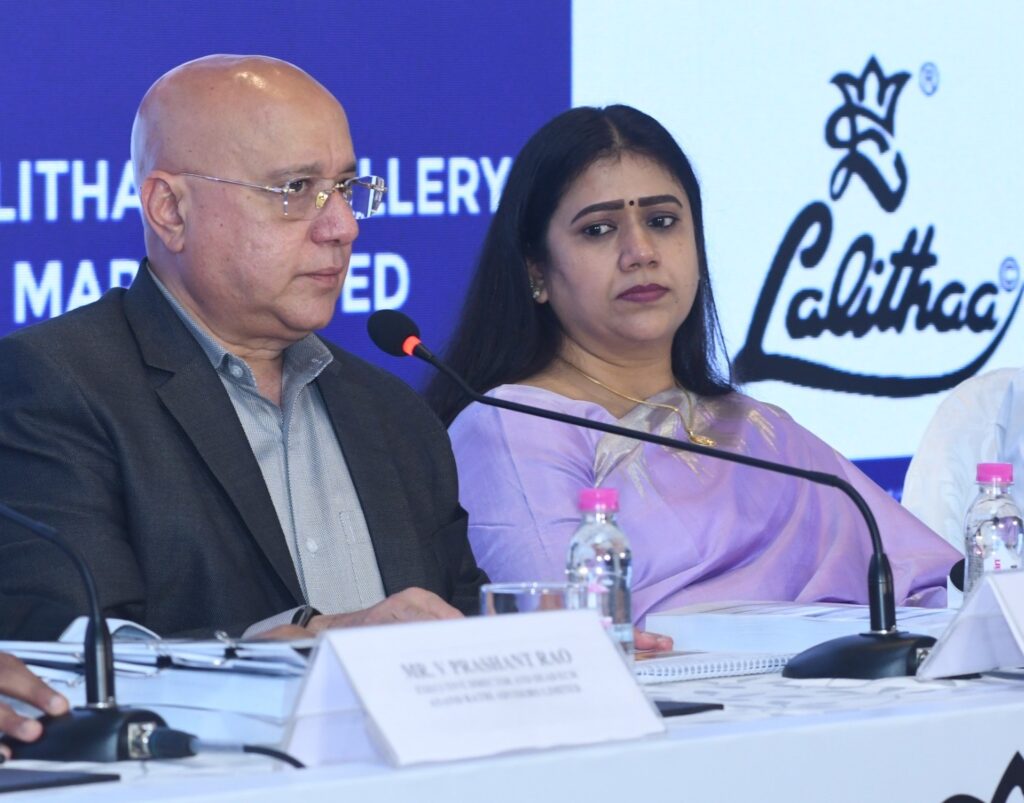
“I sell at cost price”
Price is central to the Lalithaa proposition.
Kiran Kumar has built much of the company’s public identity around a simple challenge to consumers: compare prices elsewhere and come back to Lalithaa if its price is better.
His explanation for the company’s competitive pricing is equally direct.
“I sell at cost price — you may call it the wholesale price.”
The statement reflects the business model Lalithaa has pursued since Kumar’s early years as a jewellery supplier.
The company operates two manufacturing facilities in Tamil Nadu — one at Thirumudivakkam in Chennai and another at Maraimalai in Kanchipuram through its wholly owned subsidiary Asita Jewellery Manufacturing Private Limited.
The facilities cover approximately 43,862 sq ft and 20,000 sq ft respectively. Operations at the Chennai facility began in December 2024.
In-house manufacturing gives Lalithaa greater control over designs, craftsmanship and production. The company also says it helps it manage wastage and offer competitive prices on BIS-hallmarked jewellery.
For a retailer operating in a market where gold accounts for the bulk of the value of the product, manufacturing efficiency can have a direct bearing on pricing and margins.
But it does not remove the fundamental risks of the jewellery business.

Gold prices, inventory and working capital
Jewellery retail is unusually inventory-intensive.
The merchandise sitting in a showroom represents substantial capital, and the value of that inventory moves with the price of gold. A retailer therefore has to balance availability, assortment, inventory turns and working-capital costs.
The company’s IPO documents identify gold price volatility, procurement, competition, changing consumer preferences and working-capital requirements among the key risks.
Credit assessments have similarly highlighted the importance of inventory management and working-capital utilisation in the business.
That makes store productivity important.
A large showroom is commercially useful only if the inventory moves sufficiently fast and the store generates adequate revenue relative to the capital invested.
Lalithaa’s reported revenue-per-store figure is therefore a more meaningful indicator of its expansion model than the number of stores alone.
The company will have to demonstrate that the productivity of its existing network can be sustained as the footprint expands.
From ₹16,788 crore to ₹25,024 crore
The financial numbers provide a strong base for the expansion plan.
Revenue from operations increased from ₹16,788.05 crore in fiscal 2024 to ₹25,023.93 crore in fiscal 2026.
Net profit rose from ₹359.83 crore to ₹1,009.82 crore during the same period.
The revenue increase of roughly 49% over two years has been accompanied by a much sharper increase in profit.
Net margin has risen from around 2.1% in fiscal 2024 to slightly above 4% in fiscal 2026.
For a jewellery retailer, the improvement is significant because higher gold prices can increase reported sales without necessarily translating into higher profitability.
Lalithaa’s performance suggests that store productivity, scale and operating efficiency have contributed to the improvement in earnings.
The company now has to maintain that trajectory while investing heavily in new stores.
Smaller cities are doing the heavy lifting
The strongest feature of Lalithaa’s business may be its exposure to smaller cities.
Of its 61 stores, 45 are in Tier-II and Tier-III locations, accounting for more than 60% of revenue.
This is closely aligned with the broader direction of India’s organised retail market.
As incomes rise and consumers become more comfortable with organised brands, smaller cities are increasingly becoming important consumption centres. Jewellery is particularly suited to this transition because it combines discretionary consumption with traditional savings and cultural demand.
The company’s earlier DRHP showed that the number of stores in Tier-II and Tier-III cities had already been a major part of its strategy, with 41 of 56 stores in these markets as of December 2024, contributing 59.05% of revenue. (Bajaj FinServ Markets)
The latest numbers indicate that the strategy has not merely continued but expanded.
For Lalithaa, the opportunity is therefore not necessarily to persuade consumers in India’s biggest cities to switch brands.
It is to build organised jewellery retail in markets where local jewellers continue to dominate.
That is potentially a much larger long-term opportunity.
Trust remains a critical factor
The jewellery business is built around trust in a way few other retail categories are.
A consumer buying a gold ornament is not merely purchasing a fashion product. Purity, weight, pricing, workmanship, exchange policies and the reputation of the retailer all matter.
Lalithaa’s use of BIS-hallmarked jewellery and its emphasis on competitive pricing are intended to address this trust equation.
Its customer schemes are another part of the strategy.
Dhana Vandhanam and Free-yo-Flexi are designed to encourage customers to return to the brand and buy jewellery over time. The company had 420,261 active enrolments in these schemes as of December 31, 2024.
Such programmes can be particularly valuable in a category where purchases are often planned months in advance for weddings, festivals and other family occasions.
They also provide organised retailers with an opportunity to convert a one-time transaction into a continuing customer relationship.
The changing jewellery customer
The Indian jewellery market is not driven only by weddings anymore.
Bridal jewellery remains a major category, but daily-wear jewellery has also become increasingly important as younger consumers look for products that can be used across work and social occasions.
Rising female workforce participation, increasing disposable incomes and the expansion of India’s middle class are expected to support discretionary consumption.
Gold also retains a unique position because it combines ornamentation with perceived financial security.
For households in smaller towns and rural areas, that combination remains particularly relevant.
This helps explain why Lalithaa’s Tier-II and Tier-III strategy has worked.
The company is operating in markets where jewellery is not simply a luxury purchase but part of household financial and cultural behaviour.
Kumar’s early experience as a supplier remains relevant to the company’s current model.
His first commercial jewellery consignment came after he took his mother’s four bangles and had them converted into six jhumkas.
After reaching Chennai, he secured an initial order from M S Kandaswamy Pillai of Lalitha Jewellery. The relationship grew, and Kumar became a supplier to wholesalers and to Lalitha.
The turning point came in 1999, when Kandaswamy faced a serious debt crisis. Kumar decided to acquire the business and help settle its liabilities.
He later added an “a” to Lalitha, creating the Lalithaa brand.
That transition from supplier to retailer gave Kumar an understanding of both sides of the jewellery value chain.
The company that emerged from that transition has since expanded into a large-format organised retailer.
The current IPO represents another transition — from a promoter-led regional business to a publicly owned company with institutional and retail shareholders.
Lalithaa is entering the market at a time when organised jewellery retail is gaining ground.
India’s jewellery industry has historically been fragmented, with a large number of family-owned and local retailers.
But consumers are increasingly moving towards brands that offer standardised quality, hallmarking, transparent pricing and a wider product selection.
CRISIL’s industry assessment cited in Lalithaa’s IPO documents estimates India’s gems and jewellery retail industry at ₹6.49 trillion in fiscal 2024 and projects it to reach around ₹12-12.2 trillion by fiscal 2029, implying annual growth of about 13-14%.
South India is already one of the country’s largest jewellery consumption regions, accounting for around 38-43% of demand according to the same assessment.
The structural opportunity is therefore substantial.
The competitive intensity is substantial too.
The competition challenge
Lalithaa will increasingly be competing with national brands such as Tanishq and Kalyan Jewellers as well as other established regional players.
These companies have larger national footprints, strong advertising budgets and increasingly sophisticated retail networks.
Lalithaa’s response is its understanding of regional consumers and its value proposition.
Its large stores give it scale.
Its manufacturing facilities give it greater control over the supply chain.
Its Tier-II and Tier-III network gives it exposure to markets that are becoming increasingly important to organised retail.
But geographical concentration remains a risk.
The company has built its brand largely in the southern states, and moving into unfamiliar markets will require investment in local designs, merchandise, customer acquisition and brand building.
The ability to reproduce its existing store economics will be closely watched.
The ₹1,200-crore fresh issue provides Lalithaa with capital to accelerate that process.
The ₹500-crore offer-for-sale by promoter Kiran Kumar Jain is separate from the fresh capital and will accrue to the selling shareholder.
The fresh proceeds, by contrast, are intended to strengthen the company’s expansion capacity.
The company has chosen a fairly straightforward deployment strategy: 12 new stores.
That makes the IPO a direct bet on physical organised retail.
For Lalithaa, the next stage is therefore less about proving that the business model works in southern India and more about proving that it can scale.
The company has already demonstrated that it can build large stores in smaller cities, generate high revenue per outlet and maintain a growing customer base.
The next test will be whether these strengths can be transferred to new locations without losing control over inventory, margins and operating costs.
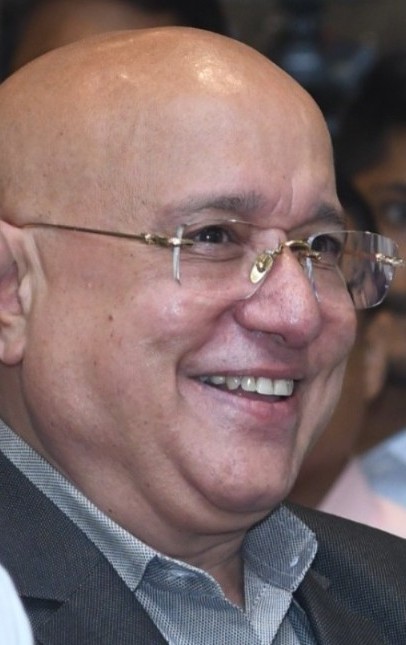
Kiran Kumar’s approach to competition is notably different from his aggressive stance on pricing.
When asked about the growing presence of large jewellery brands, his response has been that there is room for everyone because the market itself is expanding.
“The market is growing and there is enough room for all to grow,” he has said.
That may be the most important assumption behind Lalithaa’s IPO.
The company does not necessarily have to take customers away from every established competitor.
India’s jewellery market itself is expanding, and the organised segment is taking a larger share of a market that has traditionally been dominated by local retailers.
The opportunity lies in that transition.
The next test
Lalithaa’s journey from four bangles to a public issue is an unusual entrepreneurial story, but the IPO is no longer about the past.
It is about scale.
The company has built a substantial southern network, with smaller cities contributing the majority of its revenue. It has invested in manufacturing, developed large-format stores and created customer schemes aimed at repeat purchases.
Its financial performance has strengthened, with revenue crossing ₹25,000 crore and net profit exceeding ₹1,000 crore in fiscal 2026.
Now it wants to add more stores and eventually expand beyond its established southern markets.
The opportunity is large. India’s jewellery market remains deeply rooted in culture and savings, while organised retail continues to gain ground.
The risks are equally clear: gold-price volatility, inventory intensity, working-capital requirements, regional preferences and competition from larger organised players.
For Lalithaa, the IPO is therefore not simply a fundraising exercise.
It is a bet that the formula developed by Kiran Kumar Jain over decades — competitive pricing, large stores, local market knowledge and organised retail — can move from a successful southern strategy to a broader Indian growth story.
The four bangles that once financed six jhumkas were a small bet.
The ₹1,700-crore IPO is a much bigger one.
This time, however, the market will be watching.