This is no time for half-measures. Budget 2026 must take decisive action to correct the course of India’s housing market.
By ANUJ PURI
India is at a perplexing point in its housing history. While headlines trumpet record luxury home sales and rising real estate prices, a far more troubling story is unfolding beneath the surface. The country is staring at the real possibility of a two-tier housing market—one that steadily shuts millions of Indians out of homeownership.
This is no time for half-measures. Budget 2026 must take decisive action to correct the course of India’s housing market. Without intervention, the divide between those who can afford luxury penthouses and those struggling to secure a basic, livable home will only deepen.
At first glance, India’s residential real estate market appears resilient. The total value of homes sold in 2025 stood at around INR 6 lakh crore, marking a 6% increase over 2024, according to ANAROCK Research. Institutional investments into real estate touched USD 8.9 billion in 2024, a sharp 51% rise year-on-year. These figures, however, mask a far more concerning reality.
Even as transaction values rose, the number of homes sold fell by 14% in 2025. The market is increasingly skewed in favour of the affluent. In 2024, luxury home sales to HNIs, NRIs and wealthy professionals surged by 170%, driven by status aspirations and inflation-hedging strategies. At the same time, affordable housing—the most important indicator of inclusive urban growth—continued to deteriorate.
ANAROCK Research data shows that affordable housing’s share of total supply declined from 38% in 2019 to just 18% in 2025. This is not a cyclical slowdown that will automatically correct itself with a market revival. It is a structural problem demanding urgent policy attention.
In 2018, more than 52% of new homes launched across India’s top seven cities were priced below INR 50 lakh. By 2025, that figure had dropped to a stark 17%. In metro cities, only about 17% of new supply now falls within this price bracket. The consequence is a widening urban housing deficit, estimated at 9.4 million units today and potentially rising to 30 million units by 2030 if corrective measures are not taken.
For middle- and lower-income households, the impact is severe. The EMI-to-income ratio for budget-constrained families has risen from 43% in 2020 to around 60% today—well beyond sustainable levels. For middle-income families, this ratio has increased from 28% to 40% over the same period, driven by higher home prices and elevated interest rates.
ANAROCK’s latest Consumer Sentiment Survey underscores this stress. In Bengaluru, one of India’s most dynamic housing markets, 42% of aspiring buyers seeking homes priced under INR 1 crore can no longer afford them, even as demand for budget housing has grown by 13% year-on-year. Buyers are not opting out by choice; they are being priced out by a market that simply cannot accommodate them at affordable levels.

The retreat from affordable housing is not due to weak demand but to harsh development economics. Affordable housing projects typically yield margins of 10–12%, while luxury projects offer returns of 25–30% or more. With land prices soaring, construction input costs for steel, cement and skilled labour remaining high, and approval processes adding delays and uncertainty, the financial logic is unmistakable. Developers naturally gravitate towards higher-ticket projects.
As a result, many second-tier developers have repositioned mid-income projects as premium offerings, sharply reducing affordable housing launches. Compounding the problem is an outdated policy framework. The price cap for affordable housing remains fixed at INR 45 lakh, a threshold set in 2017 that bears little resemblance to current land and construction costs. In Mumbai’s peripheral areas, a modest 600 sq ft apartment now costs INR 60–75 lakh. In Pune, similar homes are priced at INR 50–65 lakh, with Bengaluru and Delhi-NCR showing comparable disconnects.
Developers attempting to stay within the INR 45 lakh cap are excluded from critical tax incentives. The Section 80-IBA tax holiday, which once catalysed affordable housing supply, expired in 2021 and has not been revived. Without this support, project viability collapses, launches stall, and prices continue to climb.
While housing policy has lagged, infrastructure development has gathered momentum. Major investments in metros, highways, ring roads, airports and logistics corridors consistently precede real estate revivals. Infrastructure does far more than improve commutes; it opens new development zones, creates employment ecosystems, raises land viability and supports sustainable housing demand. Cities such as Bengaluru, Hyderabad, NCR and Pune have repeatedly demonstrated how new connectivity triggers residential growth in newly linked areas.
Budget 2026 must therefore accelerate last-mile urban infrastructure. Initiatives under the National Infrastructure Pipeline and PM Gati Shakti are steps in the right direction, but implementation needs to be faster. Priority funding for metro expansions, suburban rail, peripheral ring roads and integrated logistics corridors would directly expand housing supply and improve affordability.
Equally critical is reviving the Section 80-IBA tax holiday for affordable housing developers. When this incentive was active between 2016 and 2021, it played a vital role in bridging the margin gap between affordable and mid-income projects. Its absence has had a chilling effect on supply. Reintroducing a time-bound, 24–36 month tax holiday for approved projects would be a fiscally defensible, high-impact intervention. The cost of inaction—financial exclusion, informal housing growth and deepening inequality—is far greater.
Affordability itself must also be redefined to reflect urban realities. The INR 45 lakh cap is no longer viable. For Mumbai and the MMR, the threshold should be raised to around INR 85 lakh, and to at least INR 75 lakh for metros such as Delhi-NCR, Bengaluru, Hyderabad and Pune. These figures reflect actual land and construction economics, not a dilution of intent. Retaining carpet area norms while adjusting price caps would ensure genuine first-time and middle-class buyers benefit, not luxury speculators. Such a recalibration could lift affordable housing’s share of new launches from 18% to over 40%, unlocking significant pent-up supply.
Demand-side support also needs strengthening. The Credit-Linked Subsidy Scheme under PMAY-U 2.0, partially revived in recent budgets, remains underutilised. Budget 2026 should expand this support by modestly increasing subsidy rates to reflect current interest levels, raising loan limits in line with property prices, and simplifying disbursal mechanisms. Even an annual outlay of INR 10,000–15,000 crore could directly support 1.5–2 million first-time homebuyers over the next five years.
India’s housing market stands at a crossroads. One path leads to deeper bifurcation—luxury homes for the wealthy, informal housing for the poor, and a squeezed middle class locked out of ownership. The other leads to balanced, inclusive growth where infrastructure, supply incentives and buyer support work in tandem to restore affordability.
Much hinges on Union Budget 2026. The policy tools are well known and time-tested. The fiscal cost will be meaningful, but the cost of delay is far greater. Each year of inaction pushes millions of Indian families further away from the security and dignity of owning a home, while inequality continues to widen.
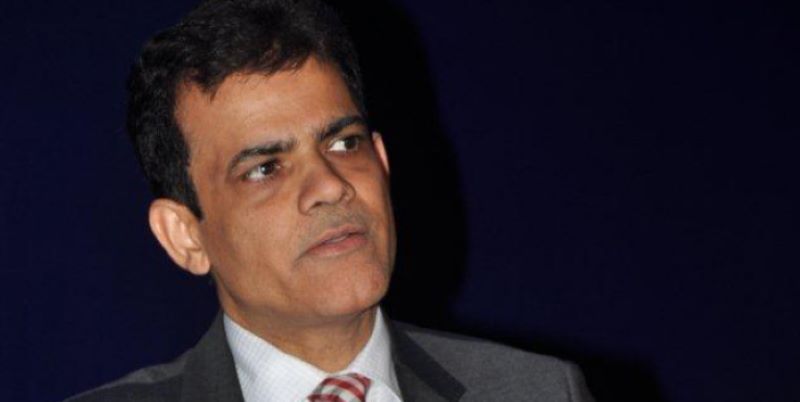
Anuj Puri is Chairman of ANAROCK Group