Budget clarity, earnings recovery, liquidity seen shaping FY27 outlook
MUMBAI, Jan 20 (The CONNECT)- — Global market volatility and sustained foreign investor outflows underscore the need for tax stability and policy clarity in the upcoming Union Budget, as investors assess India’s near-term growth and capital flow outlook, said Sandeep Bagla, Chief Executive Officer of TRUST Mutual Funds.
“Globally we are experiencing a volatile market period and I expect the upcoming budget to keep various scenarios in mind and their potential impact on our economy,” Bagla said.
He said stability in taxation, particularly around capital gains and pass-through structures, would help investors plan long-term diversification. “I expect stability in taxes, especially around capital gains and pass-through taxation,” he said, adding that tax benefits for fixed-income funds should be reintroduced, with a clear segregation between active and passive strategies.
Bagla said infrastructure-led policies remain critical for sustaining growth momentum. “I expect policies to be accretive to infrastructure growth with continued levies in capital incentive segments to boost future economic development,” he said.
From a global investor perspective, Bagla said trade and capital flow dynamics remain mixed. “While tariffs remain a challenge, the government is working on strengthening relations with countries that boost trade and ease capital flows into the Indian economy,” he said.
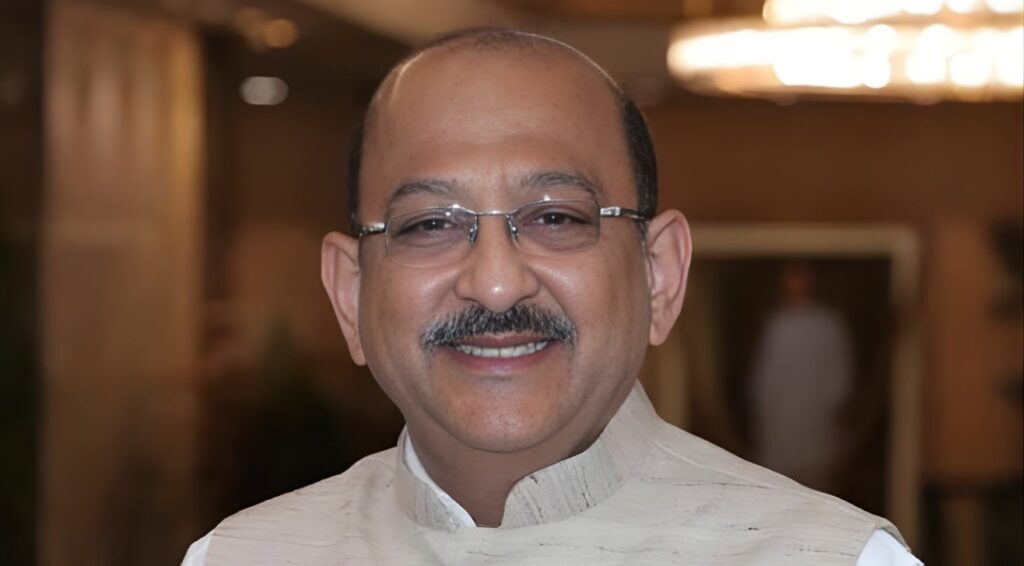
He also flagged the importance of fiscal discipline and targeted investments. “Other critical factors would be taking a stand on measures that lend some support to fiscal consolidation and direct investments in sectors which can strengthen long-term growth potential for the Indian economy and cushion it from potential geopolitical shocks,” Bagla said, adding that growth is likely to improve selectively across sectors.
Bagla said he remains cautious but constructive on markets. “I am staying cautiously optimistic on the Indian markets in FY27,” he said.
Reflecting on recent performance, Bagla noted that market returns masked underlying stress in capital flows. “While the Nifty has delivered a respectable 10 percent return in 2025, we saw massive FII outflows,” he said, attributing them to stronger performance in other emerging markets driven by AI-led momentum, a strengthening dollar, currency pressures, and delayed progress on the India–U.S. trade agreement.
“Domestic investors continued to be strong buyers of equities, but foreign investors remained sellers for most of the year,” Bagla said.
Looking ahead, he said the market setup for 2026 appears more supportive. “Valuations have corrected to more reasonable levels, domestic liquidity remains strong, and macro fundamentals are robust,” he said, adding that “the RBI’s rate cuts and surplus liquidity stance are supportive of growth.”
Bagla said easing inflation and steady growth projections underpin the equity outlook. “With inflation at multi-year lows and GDP growth projected at 6.8 to 7.3 percent for FY26, the backdrop for equities remains positive,” he said.
He said markets are likely to be driven more by earnings and fundamentals than by broad sector moves. “We expect markets to be earnings-result driven, with stronger positive results from individual stocks based on fundamentals,” Bagla said.
On global risks, Bagla said concerns persist around U.S. fiscal stress, elevated bond yields, and geopolitical tensions. “These factors could weigh on India’s export sectors, particularly IT services and manufacturing,” he said, while noting that softer commodity prices, including crude oil, have eased inflationary pressures.
Summing up near-term expectations, Bagla said, “Q3 FY26 earnings are expected to be steady with overall growth of around 10 percent,” led by domestic sectors and global commodities, with festive demand and GST-driven consumption supporting topline and profit growth.