Tax clarity, storage relief, financing reforms key to green manufacturing scale
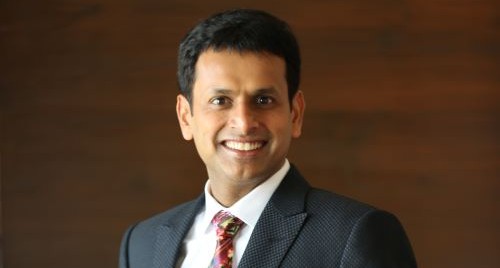
NEW DELHI, Jan 16 (The CONNECT) – As India sharpens its clean energy, manufacturing and green fuels ambitions, the Union Budget 2026–27 offers a crucial window to remove structural cost distortions and provide long-term investment certainty, said Vineet Mittal, Chairman, Avaada Group.
Mittal said rationalisation of direct taxes is key to improving capital efficiency in renewable projects. “We strongly advocate zero income tax on dividends from renewable energy SPVs to their holding companies. This will enable efficient capital recycling and help lower tariffs,” he said. He also sought clarity that income earned during the construction period should be treated as a capital receipt and adjusted against project cost, noting that this would significantly reduce litigation and improve ease of doing business.
On indirect taxes, Mittal underlined the need to recognise energy storage as a core power asset. While electricity remains GST-exempt, battery energy storage systems and pumped storage services attract 18 per cent GST without input tax credit. “Reducing GST on storage charges to NIL will directly lower the cost of renewable power,” he said.
Mittal also called for zero basic customs duty and IGST for at least five years on capital equipment used in manufacturing solar glass, ingots, wafers, cells, modules and batteries, including advanced TOPCon and HJT technologies. He pointed out that imported equipment currently inflates project costs by 20–30 per cent.
From a policy perspective, stronger enforcement of Renewable Consumption Obligations is essential to boost demand and investment confidence, Mittal said. For distributed energy, he pitched for easier financing options for rooftop solar, similar to consumer electronics financing, and extension of the KUSUM scheme CFA sunset from March 2026 to March 2027, along with timely disbursement and viability gap funding support.
He also urged rationalisation of project finance norms, including lowering the land acquisition threshold from 75 per cent to 50 per cent or less, and waiver of refinancing prepayment premiums. “Collectively, these measures can move India from clean energy deployment to clean-tech leadership and position the country as a global clean energy manufacturing hub,” Mittal said.