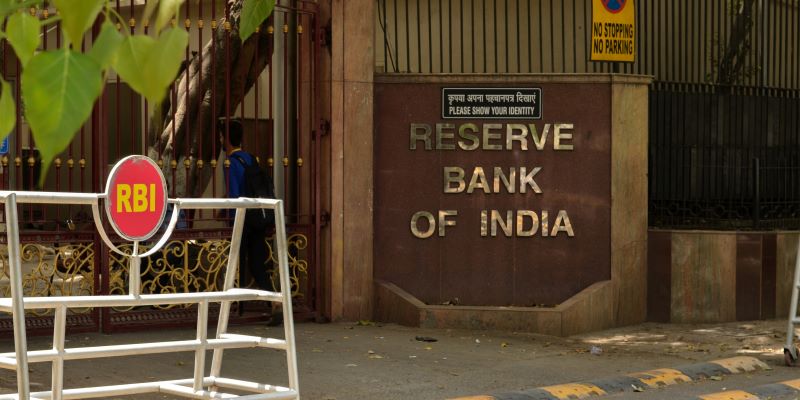
‘The impact of the 100 bps rate cuts since February 2025 on the economy is still unfolding’.
MUMBAI, Aug 6 (The CONNECT) – The RBI has decided to maintain status quo of the repo rate in view of the current macroeconomic conditions, outlook and uncertainties over tariff negotiations.
The Monetary Policy Committee resolved to maintain a close vigil on the incoming data and the evolving domestic growth-inflation dynamics to chart out the appropriate monetary policy path.
The impact of the 100 bps rate cuts since February 2025 on the economy is still unfolding, RBI observed which meant that the banks are yet to fully transfer the benefits to the end consumer. This aspect also reflected in the realty industry comments.
The RBI has decided to keep the repo rates unchanged at 5.5%, also taking cognizance of the ongoing tariff uncertainties and the possible impact on the Indian economy, Anuj Puri, Chairman – ANAROCK Group, said.
A rate cut leading to lower interest rate environment would have particularly boosted the affordable housing segment, which has been under considerable pressure in recent years, he said reacting to the central bank’s decision to maintain a status quo with the repo rate.

The Indian real estate weathers unrelenting turbulence as the sentiment is pressured by Trump’s new 25% tariffs and a notable 20% plunge in housing sales across top metros, as per the latest ANAROCK data.
In Q2 2025 alone, just 96,285 homes were sold, a steep fall from 120,335 a year ago, indicating increasing buyer hesitancy and market uncertainty. Amid these headwinds, the central bank’s policy choices come with high relevance to initiate a turnaround and arrest further market deterioration, Puri said
ANAROCK data also shows that average residential prices across the top 7 cities combined have increased by 39% in the last two years alone – from INR 6,470 per sq. ft. as of Q2 2023 to INR 8,990 per sq. ft. as of Q2 2025. The affordable housing segment’s fate may be further dampened by the ongoing global trade tensions and tariffs imposed by the Trump administration. This is largely because of its impact on the MSMEs – the key target audience of the affordable segment.
That said, overall, homebuyers are currently driven by long-term confidence rather than short-term rate fluctuations. Given the upcoming festive season, developers may look to keep the market momentum going with offers and flexible payment plans, which may help improve affordability for many genuine buyers, Puri explained.
Upasna Bhardwaj, Chief Economist, Kotak Mahindra Bank said, the monetary policy committee’s decision to keep rates unchanged comes in the wake of global uncertainties, even as inflation remains benign and downside risks to growth persists. With inflation likely to trend higher post the near-term favourable trends, the bar for rate cuts ahead is set very high. “We can see some room for the last leg of easing only if growth momentum slows significantly,” he said.
Amit Goyal, MD, India Sotheby’s International Realty, had a different perspective. He said: The RBI’s neutral policy stance, coupled with a 6.5% GDP growth outlook and a softer inflation trajectory, reflects a steady macroeconomic confidence. Strong consumption and stable urban demand are already supporting India’s housing sentiment. With home loan rates easing with 3 previous repo rate cuts in 2025, we believe the momentum in home buying will remain cautiously positive—much like the RBI’s approach, balancing domestic resilience with global uncertainties.
Piyush Bothra, Co-Founder and CFO, Square Yards, opined the RBI’s decision reflects a ‘watchful waiting’ approach amidst a mixed economic landscape. Domestically, India’s growth remains resilient, and recent inflation figures have been benign, staying below the RBI’s target range. The global economic environment, however, presents uncertainties, including volatile commodity prices and the monetary policy stances of major central banks, which could have spill-over effects on our economy.
For the residential sector, Bothra said, a further cut would have been a welcome festive bonus for homebuyers. This stability ensures that borrowing costs remain manageable and avoids any sudden shocks to the market. The onus now squarely falls on the banks to enhance the transmission of previous rate cuts, ensuring that the benefits of lower interest rates are fully passed on to homebuyers, he said.
Vimal Nadar, National Director and Head of Research, Colliers India, said stability in monetary policy augurs well for homebuyers and real estate developers, particularly in the affordable and mid-income segments.
The lowering of interest rates in the recent past is expected to be fully passed on to the end users in upcoming quarters, who are likely to benefit from reduced financing costs. With the festive season approaching, developers can further capitalize on this momentum with timely project completions, new launches and festive offers & discounts, he said.

Amit Prakash Singh, CBO Urban Money & Co-Founder Square Yards, said the decision translates directly into a period of stability for borrowers, with predictable EMIs and interest rates. This also provides the banking system a crucial window to further transmit the benefits of previous rate reductions.
All eyes are now on the October policy meeting, where a rate cut is widely expected, which would act as a timely catalyst to boost consumption across sectors and buoy the sentiments during the upcoming festive season, Singh said.
Shrinivas Rao, FRICS, CEO, Vestian, this steady monetary policy is expected to bring stability to the real estate sector and encourage fence-sitters to make investment decisions.
Prashant Sharma, President, NAREDCO Maharashtra, also gelt that The RBI’s decision to maintain the repo rate at 5.5% despite easing inflation reflects a cautious yet balanced approach to managing global headwinds and domestic stability. For the real estate sector, a status quo on rates ensures continued momentum in homebuyer sentiment and sustains the affordability factor in housing.
However, given the moderating inflation and macroeconomic uncertainties, the industry looks forward to a calibrated rate cut in upcoming reviews to further support growth, especially in the affordable and mid-income housing segments, he said
Kaushal Agarwal, Chairman, The Guardians Real Estate Advisory, said the real estate sector has shown resilience despite global uncertainties. With inflation under control and GDP growth projected steadily, a repo rate cut would have been the perfect catalyst to trigger festive season demand.
He said, the industry remains cautiously optimistic that a more dovish stance could follow if inflation stays within the comfort zone.
Vikas Jain, CEO, Labdhi Lifestyle and President, NAREDCO Maharashtra NextGen, pointed out that affordable housing and first-time homebuyers remain extremely interest rate sensitive. A cut would have significantly pushed housing demand forward. Nevertheless, he said, “we hope the RBI remains open to easing rates in the upcoming cycles to spur broader economic and sectoral growth.”
Shraddha Kedia-Agarwal, Director, Transcon Developers, said
with inflation easing and homebuyer interest still high, the real estate sector was hopeful for a rate cut to further catalyse housing demand. However, the RBI’s decision to maintain status quo reflects a watchful approach to global uncertainties like trade tariffs. Stability in rates does support long-term planning for both developers and homebuyers, but a softer interest rate regime would provide the real boost required for deeper market penetration, especially in metros like Mumbai, she said.
Dhruman Shah, Promoter, Ariha Group, explained that in a scenario where global trade dynamics are shifting and inflation has visibly moderated, the real estate industry expected some policy support via rate easing.
Nonetheless, the RBI’s decision to maintain the current rate suggests that stability is being prioritized, he said. “While this helps developers plan without sudden shifts in financial costs, we anticipate a pro-growth signal in the next review, especially to give a push to the affordable housing segment,” he said.
Nihar Jayesh Thakkar, Founder, The Mandate House Pvt. Ltd., said the MPC’s decision to keep the repo rate unchanged is a balanced one, considering the broader economic landscape. For real estate stakeholders—especially in the advisory and sales ecosystem—this offers continuity in buyer behavior and home loan affordability, he said.
A future rate cut would help unlock fence-sitters and attract a new wave of aspirational buyers, especially in the mid- and premium segments, he said.
Tribhuwan Adhikari, MD & CEO of LIC Housing Finance, said: the MPC’s decision to keep the repo rate unchanged at 5.50% is on expected lines after a significant 50 basis points rate cut during the previous meeting. This move reflects a balanced and cautious approach to support economic stability. The Real GDP growth projections also remain unchanged at 6.5% for FY26, further reinforcing confidence in the macroeconomic outlook. While demand for home loans was slightly subdued in Q-1, we remain optimistic on the positive buyer sentiment especially in the ensuing festive season in the affordable and mid-income segments. The current rate environment continues to offer favourable conditions for homebuyers.
Gopal Jain, Managing Director and CEO, Gaja Alternative Asset Management Limited, said the RBI’s decision is a prudent step, particularly amid rising global uncertainties.
This continuity in policy, Jain said, is especially important as India faces external challenges such as trade tensions and tariff-related volatility. A stable monetary framework supports investor confidence and creates a predictable environment for long-term capital deployment.
He said, for private equity investors, this reinforces India’s credibility as a resilient, policy-driven economy. Key sectors such as financial services, consumer and technology are well-positioned to benefit from the supportive rate environment and macroeconomic stability.
The neutral stance also provides the RBI with flexibility to respond to changing conditions, which is essential in today’s dynamic global landscape, he said and expressed the confidence that India’s growth outlook will continue to attract meaningful investment into the country.
Pradeep Aggarwal, Founder & Chairman, Signature Global (India) Ltd., said, the RBI’s decision reflects a steady approach to supporting economic recovery amid stable inflation. With borrowing costs significantly reduced following three consecutive rate cuts, the current policy stance ensures continued affordability, as rates remain at comfortable levels. This is expected to sustain consumer confidence and support ongoing momentum in key sectors, including real estate, he said.
The unchanged policy stance is set to keep the real estate sector’s growth momentum on track, Aggarwal said.
With steady interest rates and strong consumer confidence, developers are expected to meet the sustained demand for quality housing through greater focus on new offerings. This sustained activity will further strengthen the real estate sector’s contribution to GDP growth, job creation, and the expansion of urban infrastructure in the coming quarters, he added.
Ashok Kapur, Chairman, Krishna Group and Krisumi Corporation, said, the move reflects a balanced approach amid ongoing global uncertainties. While a rate cut—as the real estate sector at large was hoping for—would have further accelerated the demand for homes across segments, borrowing costs continue to remain at relatively accommodative levels, supported by the cumulative 100 basis points reduction earlier this year.
With the festive season approaching, stable interest rates and the continued transmission of past rate cuts are expected to keep housing demand buoyant—particularly in the mid and premium segments, he said.
Backed by a positive buyer outlook and attractive developer offerings, market sentiment remains strong, and we anticipate steady sales momentum in the months ahead, he said.
Sushil Bedarwal, CMD, Bedarwal Group, said, “The RBI’s decision to pause the ongoing rate cut cycle is in line with the prevailing economic indicators and the current geopolitical environment. It is also important to note that the market is still in the process of fully absorbing the impact of the last three consecutive rate cuts, which together amounted to a significant 100 basis points reduction.
The encouraging news is that India’s economic growth continues to be resilient, he said.
If macroeconomic conditions remain stable and supportive, he added, “we anticipate the RBI may resume the rate cut cycle with a further reduction of 25–50 basis points during the remainder of this calendar year.”
Raoul Kapoor, Co-CEO, Andromeda Sales and Distribution Pvt Ltd, said, “As anticipated, the Reserve Bank of India (RBI) has kept the repo rate unchanged, despite favourable factors such as a good monsoon and inflation remaining well below the comfort level. The decision appears to be guided by ongoing geopolitical uncertainties and unresolved global tariff concerns.
However, the cumulative 100 basis points cut over the last three Monetary Policy Committee (MPC) meetings has already reduced borrowing costs significantly. As noted by the RBI Governor, the full impact of these rate cuts is still unfolding, and we expect retail credit demand—particularly for home and personal loans—to gain further momentum in the coming months, driven by the upcoming festive season, Kapoor said.